


52. What is expensive in business but DOESN'T PROFIT? What is cheap but PROFITABLE?
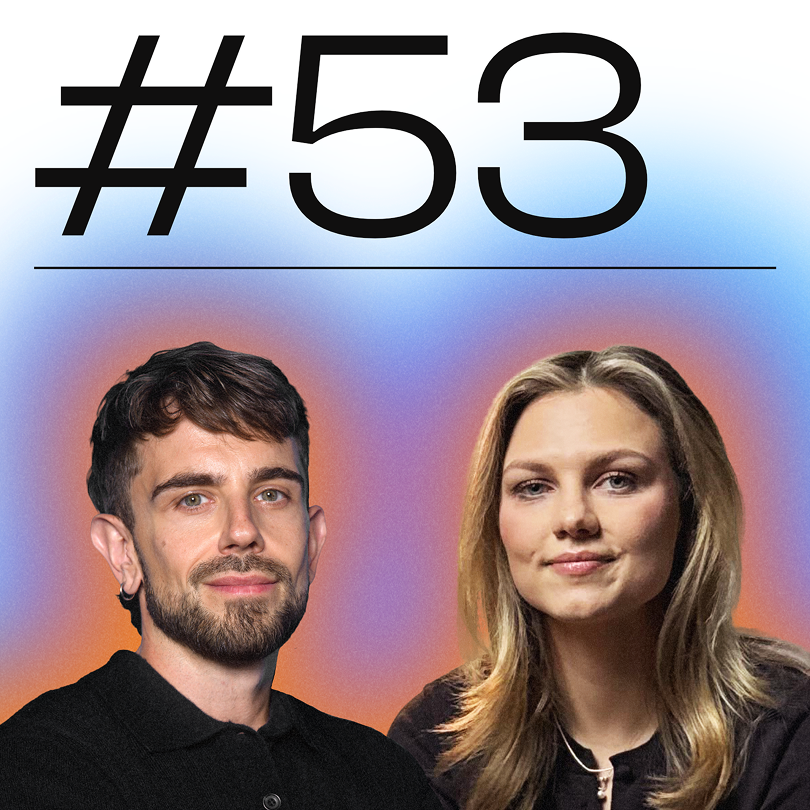
In this episode, Ilona Skarbowska talks to Radek Rejsel about what is worth paying extra for in business—and what isn't worth overpaying for.
After five years of running a UX consultancy, we’ve developed our own list, and in this episode, we’ll walk through selected aspects of growing a business.
[This podcast is being hold in Polish 🇵🇱]
Listen to the podcast where you feel most comfortable.

Opowiemy Ci:
- audytach do szuflady,
- strategic workshops without decision-makers,
- o tym, dlaczego designerska wyciskarka do cytrusów wcale nie pasuje do Twojej kuchni.
⚒️ Tools we use:
- ChatGPT: support in generating content and editing texts, searching for concepts, organizing statements
- Perplexity AI: tool for quick research and verification of information, searching for sources, pulling a short summary of long reports/articles
- Mid Journey: creation of graphics, illustrations and visualizations of personas - the quality of this tool has improved strongly recently, and we are fine-tuning better prompts
- Luma AI: creating videos with the help of artificial intelligence
We encourage you to subscribe to our podcast! If you are interested in the topic of customer experience in the digital world and how design can support the achievement of business goals then stay with us.
We try to add new episodes twice a month, but as every entrepreneur knows, our success varies. Have an idea for the next episode?
Contact us at hey@designzima.com – we'll create an episode with your question. We love being surrounded by beautiful objects with a story, which is why our podcast is produced in the Warsaw Bazaar showroom – where you'll find design icons and vintage design.
We believe that good design doesn't have to cost a fortune.
Want to meet our team?
Follow us on Instagram: zima_uxuidesign
We comment on reality through a UX filter on LinkedIn:
👩💻 Ilona https://www.linkedin.com/in/ilonaskarbowska/
👨💻 Radek https://www.linkedin.com/in/radekrejsel/
Transkrypcja
Ilona: Radek, I have an offer for you. I promise you'll lose 5 kilograms a week until you reach your ideal physique.
Radek: Alright, I'm in.
Ilona: Okay, but the catch with this miraculous method is that you simply can't eat anything.
Oh, so I need to do something?
Actually, nothing, because all you have to do is starve yourself. Okay, but not eating is a pretty big challenge, you know.
Yes, and that also sounds absurd. And often in UX or marketing, such absurd promises are presented in PowerPoint as a miracle cure for all problems, but ultimately, it leads to health problems.
Or problems for the company, right?
Yes. And that's exactly what today's episode will be about. I want to talk to you about actions that are... expensive, but deliver great results. About those expensive actions that, unfortunately, just look good in a presentation. About inexpensive actions, cheap initiatives that you can take and are more valuable than campaigns costing six figures. And about those cheap actions that create chaos in an organization and ultimately cost you twice as much.
So, shall we start?
Yes, and that's what today's episode of the Design and Business podcast will be about. My name is Ilona Skarbowska.
And I'm Radek Rejsel.
Alright, so let's start with the first action that I think
It's expensive, but it's worth doing – it's good branding.
Mhm, I definitely agree with that. I think many companies, and this is probably a very striking example, come with the expectation that branding will be the smallest portion of the budget. And of course, you can deliver branding for less, but the question is, how will that branding deliver on our strategy and our assumptions and meet our goals?
02:11 Ilona : Yes, because I'm thinking about that too. Sometimes clients think that branding equals a logo. Just a logo. Yes, and that's a huge oversimplification, because creating just a logo, taken out of its entire strategic, branding context, won't be a very high cost. I know I'll lose the 'it's expensive' argument here, but it's worth making the point quickly. But if we think about branding strategically and what branding is actually supposed to bring us, well then... then we're not just thinking about the logo itself, but rather about everything that's happening around it.
02:46 Radek : And it's also commonly believed that writing a branding brief is the only thing, and sending a few inspirations is the only thing you need to do, that the process is so simple that graphic designers and creatives will quickly understand what's needed. However, branding, truly, branding is a representation of our strategy, our vision, our mission for the product. It has to be very strongly connected to how people, or rather, to whom we'll be speaking.
03:19 Ilona : Yes, meaning it's based on a real segment.
03:20 Radek: Yes, and it's very difficult to understand that from just a brief, or just inspirations. When we work, we go through the client's strategy and their personas very thoroughly in workshops, and only then do we collaboratively design a solution in the form of a logo, the entire visual identity, colors, icons, illustrations, the whole world that a brand's visual identity truly is.
03:46 Ilona : Yes, and if I were to compare, or rather, to say what benefits good branding brings, we can't forget that well-executed branding makes a company look professional, look trustworthy, and consequently, it lowers sales costs. So, if at first, when looking through branding offers for example, we think, 'Okay, this is expensive, it's not worth doing,' then ultimately we pay for it later by either having sales problems, especially if we're not a very well-known brand. If we look like an unprofessional company, then we'll simply get stuck in other areas.
04:27 Radek : That's a very common problem, and I see it very often. And unfortunately, it's very difficult to convince, especially young companies, that investing in good branding can truly pay off later. Or rather, it won't cause financial trouble later by having to undo everything.
Yes, but I'm also thinking about flipping that question, or rather, that statement, 'expensive, but worth it'. Because we can also say that branding will be expensive. And it's not worth doing if it's based solely on the owner's ego, and not on the real segment we're speaking to.
It's easy to fall into that trap of 'I like it, I don't like it,' right? Yes, yes. But it's not about...
Of course, the opinion of the person who approves and sets the company's direction is important, but we always have to consider who the client is... the client we're selling to. Yes, the one who buys from us, the one who pays money for whether... whether our company will ultimately survive or not. Okay, so you'd agree with me that it's worth doing, that branding isn't the cheapest, but it's worth doing and worth investing in.
Yes, and it's worth doing it really well.
Alright, what about the second segment then, the 'expensive and not worth it' category: doing research, gathering user feedback?
05:47 Radek : Well, that's controversial. It depends on your strategy and your goal, right? If you genuinely want to understand your customer or the person who will ultimately use the product, or discover the needs that will then drive your product strategy, then it's definitely worth it. It's worth investing in such research, and even conducting it on a broad scale. Of course, that also depends on the scale of your product and your organization. But what I often see is that large behemoths often use research to justify decisions they've already made.
And that's precisely the pitfall in research, or the challenge that makes it far from an easy field: poorly conducted or misinterpreted studies can yield results that we can subtly steer or manipulate. So, we can truly set up studies to get the outcome we desire, or we can misinterpret the findings to simply support the decisions we're already inclined to make.
Yes, and from the perspective of us designers, user experience, or brand development in general, we sometimes feel that such research isn't worth doing. But then I also think, the entire industry has been saying for years that this research is essential, that it's worth doing. And I wanted to add this point here, perhaps a bit controversially, because I believe research doesn't have to be expensive; it really depends on the method you choose.
And I'll reiterate that they are worth doing, but you just need to consider what you can afford. Diary studies, which are spread out over time, become more expensive the longer they last. You don't necessarily have to choose that specific method; instead, you can opt for a method, such as semi-structured interviews, that will provide faster user feedback and won't be such a significant strain on our budget.
We need to ask ourselves what our research objective is. Then, we select a method that is feasible given our budget, our situation, and sometimes also the timeframe in which we need to make certain decisions that this research is intended to support.
Yes, but Radek, you mentioned that corporations sometimes use this research method to support decisions that have already been made. Okay, but now for the startup segment we work with. I also see some problems in this segment. And the most common thing I observe among these newly established companies is conducting research not with our target audience, not with our users. And indeed, this research will be expensive and not worth doing if we recruit someone who will ultimately never be a customer of our solution.
That's right, and I think that's particularly characteristic of young companies that don't yet fully know their customers, they don't yet know who they're really selling their product to. And this is a moment, a testing ground, where these companies are just learning how to truly approach building their businesses and making strategic decisions. Because they see they're not engaging, damn it, this insight isn't going to help us, nothing from
we won't do anything, because that person won't buy from us anyway. And I think you had a call today with someone who said exactly that. I managed to overhear. Okay, I just wanted to point out. You said, 'Well, that won't be our persona, that won't be our client.'
09:47 Ilona : So the first thing I wanted to point out is that you're eavesdropping on my calls.
And the second one was actually a call from our client. We were discussing the project, and she mentioned she'd spoken to a friend. So, I don't want to call it a red flag, but it's a bit of a litmus test, indicating that this person isn't our target client. She talked to her friend about her concept. Yes, I support that – you should do it, go out, gather inspiration. But she just told me how that person commented on her business idea. And of course, my reaction was simply that this isn't our target persona, because our persona involves – well, I don't want to give too much away, as it's a product not yet on the market – but there's a specific life event that somewhat changes one's perspective on health, and this person simply isn't at that stage of life. She doesn't have that – I'll use the English word – 'trigger' to use this solution, because she simply doesn't have that health problem.
10:50 Radek : I'd like to emphasize something important here: our friends and family, in every decision-making process for our business, when we go to them and ask for something, they are not our consumers, they are not our customers – they are our fans. These are people who wish us well, and usually, even if they criticize something, they believe that their criticism, or saying something negative, will ultimately benefit us. But truthfully, that's not a true reality check.
11:23 Ilona : Yes. In the context of research for young companies, I see another issue that's quite problematic and will make the research expensive, specifically if we ask different questions to each person we interview.
11:40 Radek : Yeah, exactly. How are you supposed to compare that then? Exactly.
11:43 Ilona : How can you draw conclusions if you ask six or eight people a different set of questions?
Mhm. Even better if you ask a question, right?
These are actually... And also, when you ask a question, make sure it's not a leading one. Right.
11:55 Radek : Yes, that's right. Do you like my product? It's cool, right? You don't like my product. Do you get what I mean?
Yes, yes. And what that means is, if companies base their analysis on conclusions from these individual people, then unfortunately, the research will be expensive and practically useless.
12:15 Radek : This is the domain of companies, startups that offer B2B products, especially those providing software. We've discussed this before, haven't we? For these clients, it's less about a comprehensive, resource-intensive solution.
Exactly. I have a thought I often recall when such a situation arises. If a company that develops software for B2B clients starts making changes for specific clients, essentially for every single client, then sooner or later it will become more of a software house rather than a company with a product for the general market. Because again, if we implement client-specific solutions, it's easy to lose sight of the core value and the actual problem being solved.
And it's hard to scale then
13:07 Ilona :. Yes, that's problematic. Now I'm going to surprise you. I wanted to ask, Radek, what are you proud of? What did you do last week?
Last week, we finalized one of the projects I'm really proud of overall. It's an application for, well, maybe not self-therapy, but a therapeutic application. We successfully wrapped up the project.
13:37 Radek : To be honest, the clients – because there are several people involved in the decision-making process – weren't entirely satisfied with one part of the project. And I heard something that was a bit... bittersweet. We were told we had set the bar too high for ourselves, because everything we had delivered previously had a 'wow' effect on them. And one of the last things didn't have that 'wow' effect. I'm proud that I managed to bring this stage to a close, to achieve such client satisfaction, and also to hear those words. We always do things with passion.
14:24 Radek : We find it very difficult to work on projects where we feel stifled, where we don't see the purpose. This is one of those projects we truly embraced and deeply believe in. And it's clear that when we have strong conviction in something and a collaborative client who trusts us, that's a perfect synergy, and that was precisely the case with this project. Indeed, this final element, from our perspective as experts, wasn't the core part of the business. It wasn't what truly drove the business.
And honestly, maybe it didn't have that 'wow' effect. But I'm proud we completed that project, and that we heard the entire application we designed delivered more than they expected. So that was great.
Yes, and that's a great point you're making, because, okay, not every project can be approached with passion, since let's be honest, we're not interested in everything. If, for example, an automotive project came our way, I probably wouldn't be as excited about it as you would be.
Okay, but there's something I personally try to do, or usually make sure I do: find that one thing in a project that really gets you going, and just, you know, latch onto it. Just run with that idea. It doesn't have to be a challenge purely about industry expertise; it could be a new way of doing something, or making any kind of change. To be honest, I get bored with projects that aren't new, aren't, like, those where you just cruise along, knowing everything is clear. Usually, even if these projects are straightforward and you just need to provide a solution that doesn't really break new ground in the industry or in the approach itself, you still need to find something that makes it feel new or different *to you* within that specific project.
16:41 Radek : Wait, what are you proud of? Maybe I'll surprise you now.
16:43 Ilona : I didn't expect this question.
You've moved so far from the microphone.
16:49 Ilona : Yes, I moved a bit away from the microphone, sorry, if I was harder to hear. What am I proud of from last week? What happened? And if I had my phone handy, I'd probably open my calendar to remind myself what happened. What am I proud of? You know what, I'm proud of the visuals, the graphic elements, that we managed to create around this podcast episode. They're small details that I feel will take us to the next level in content production in general, whether it's this podcast, Instagram Reels, or content production overall.
See you in winter.
Yes. And I also feel like we did it in a really cool, UX-driven way, that we mapped out our podcast journey, how it should look, and then executed it. But mapping it out is one step, and execution is another, and we implemented all of it. So I'm incredibly proud that we managed to do it, and a physical manifestation that it actually got done are these beautiful coasters that I have with me today for the first time on the podcast, on which I have my notes.
This is, dear listeners, a work in progress, but as you can see, we're moving forward.
Yes, so this is something I'm super proud of, and so, big kudos to the whole team, because we went from vision to implementation. Alright, let's get back to the podcast. I mean, to our main podcast topic. Let's move on to the category: what actions are expensive and not worth doing. First on my list are strategic workshops without decision-makers, without people who can make decisions.
18:35 Radek :. It's a terrible pain, it's a terrible pain, and unfortunately, it still happens. It occurs, I'd say often, that we run workshops, and decision-makers unfortunately sit in the back, completely absent, not listening, and only show up when decisions should have already been made and we should be moving to the next stage.
19:02 Ilona: And what does that cause?
19:04 Radek: Well, it means we go back, and we often have to change various assumptions. These people don't understand the process we've been through. If they had been at the workshops, they would have understood why the decisions were made, and we could have moved forward. Let's remember that decisions, even the wrong ones, move the project forward and allow us to validate our choices and learn more, because until we make a decision and test it, we're really just living in a dream world.
19:31 Ilona : Yes, and it's expensive because we're going in circles and spending money repeating certain actions that, if everyone had been in the room, if everyone had been at that strategic workshop, for example, we wouldn't have to repeat. And that's why it gets expensive, because it's time, it's repeating the same processes, and often changing decisions simply because someone wasn't at the meeting. And that also just generates unnecessary costs. But strategic workshops like these are worth doing, so I'm not saying don't do them at all, just make sure that everyone who should be at such a meeting is present. Cheap, but not worth it. UX audits.
20:17 Radek : UX audits themselves. Or maybe, let me put it differently. A UX audit is necessary, but it's part of a process. A process of change. However, if we conduct an audit just to find out what's not working and then do nothing about it, that's simply throwing money away.
20:29 Ilona: Yes, so, a UX audit that just gets filed away.
20:31 Radek: Yes, very often, people responsible for the product or owners come to us, and they already have an idea of what's not working. I get the feeling that an audit has become a standard, almost obligatory step.
20:54 Radek : I think there's also often a hope that an audit will uncover things that the team can then implement on their own. Unfortunately, it often happens that while there might be some quick wins to be found, without a larger project – a redesign of the site, a specific functionality, or a user journey – we won't be able to move forward.
21:20 Ilona : Yes, that's true. I have an issue with UX audits that are just filed away and never acted upon. A UX audit falls into the category of 'cheap, but not worth it' precisely because if someone pays 5-6 thousand – which is the relative cost for a typical website audit – yes, that's not a huge amount of money, but paradoxically, this audit won't be cheap if we don't define key user journeys or don't define the specific goal, whether product-related or strategic.
Again, this is the strategy we discussed earlier. This is another reason why it's worth conducting strategic workshops, because we can eliminate some fundamental and UX errors, but without understanding the context of business goals and without personas, it's not enough.
I also have a point regarding the report itself. I recently came across a UX Audit where problems found on the website were listed, but these problems weren't prioritized. In other words, it didn't specify whether a problem was very serious or just a minor issue, to put it colloquially, that wouldn't move the needle on conversions.
Yes, but weights are assigned after we've defined our goals in strategic workshops. How does the problem affect the business goal?
We need to know this, we need to know the business goal.
Yes, and I'm wondering if our listeners or viewers currently have any ideas for actions, or if an idea comes to mind for actions that are cheap but absolutely not worth doing, yet from their own experience, they ended up spending money on exactly such an action in the context of UX or marketing. Share your thoughts in the comments.
23:14 Ilona : Okay, next category: cheap and totally not worth doing. Making it difficult to cancel subscriptions.
Such dark patterns that leave users feeling frustrated.
23:32 Ilona : Yes, and for a while, the results might hold up, and this churn rate, meaning cancellations of our service, won't be high, but it makes for a bad experience. And when I was preparing examples for our podcast, that was the first thing that came to mind, because some time ago I tried to downgrade my Netflix subscription. Until then, I was using it with my mom, so we had a multi-user subscription. But then my mom said, "I'm not going to watch this anymore," so I said, "Okay, I'll downgrade," and I absolutely couldn't do it from the app. The app kept redirecting me to the website, so I gave up on it. For several months, I kept paying for that higher subscription, even though I didn't need it, and I constantly felt like it was a waste. Until the day my card, which was linked to Netflix, expired, and I never linked a new one. Of course, sooner or later I'll be back. I'll probably be back.
24:46 Ilona : With my tail between my legs. With a new card. But for now... Or I'll come over to your place to watch something.
24:57 Radek : Someone watched our old podcast. Yes, I'll handle it. Exactly.
25:01 Ilona : In the long term, this strategy... it might work, it might not work, but users remember when we treated them poorly, as just a product or a service. And we usually remember the beginning and the end, meaning we remember the initial onboarding.
25:17 Radek : First impression, first use.
25:20 Ilona : Yes, the first use, and then that ending part, when we want to finish or simply stop using it. We part ways. Yes, we part ways with the product. And such a bad impression can mean... we won't return to it. Yes, if competition emerges, I'll just go use HBO, for example. And let's move on to the last category. Cheap, but worth it.
Okay.
First up: viral content.
Viral marketing.
What do you think about it?
I think that's the holy grail for any company looking to build its online presence. We managed to do it, and it really wasn't a huge expense. The thing is, it doesn't require a big budget, but it's not simple.
It's not simple, if we consider what led us to that moment of success. Definitely, a certain consistency in creating these materials. And certainly, a specific strategy, because we specifically want to build our online image more from a 'behind-the-scenes' perspective, you could say. From behind the scenes, but also from the workshop – perhaps from the team's perspective, showing how we work. Yes, we want to be known as people who – we embody the jester archetype. This means our brand, while professional, also creates magic; our projects are meant to captivate the market. We're a brand that doesn't always do things in a stiff or formulaic way. We want to feel comfortable within our company. This is more of an internal archetype for us. We want our collaborative work and what we do for our clients, as well as our cooperation with them, to be on a relaxed, human footing. That's why we allow ourselves a bit of that distance, and our social media, specifically Instagram and TikTok, are completely entrusted to our dear Asia.
I think that's the holy grail for any company looking to build its online presence. We managed to do it, and it really wasn't a huge expense. The thing is, it doesn't require a big budget, but it's not simple.
It's not simple, if we consider what led us to that moment of success. Definitely, a certain consistency in creating these materials. And certainly, a specific strategy, because we specifically want to build our online image more from a 'behind-the-scenes' perspective, you could say. From behind the scenes, but also from the workshop – perhaps from the team's perspective, showing how we work. Yes, we want to be known as people who – we embody the jester archetype. This means our brand, while professional, also creates magic; our projects are meant to captivate the market. We're a brand that doesn't always do things in a stiff or formulaic way. We want to feel comfortable within our company. This is more of an internal archetype for us. We want our collaborative work and what we do for our clients, as well as our cooperation with them, to be on a relaxed, human footing. That's why we allow ourselves a bit of that distance, and our social media, specifically Instagram and TikTok, are completely entrusted to our dear Asia.
27:18 Ilona : Yes, but it's interesting that when I mentioned viral videos, you probably immediately thought of those two viral videos that Asia made go viral on Instagram, which are incredibly absurd, but as I was preparing for
podcast, I realized that we've had viral content not just on Instagram, but on LinkedIn too.
27:37 Radek : Oh, well, those kinds of viral hits aren't easy. I mean... it's even harder. It's even harder, but what's also important to mention is that it's cheap, sure, but it's also a roll of the dice. I mean, you never know how you'll hit the algorithm, you never know. And ride that wave. Exactly. And also, what that viral will actually bring you. You have to be careful, because it can be a very positive viral, or it can be negative. So if your product gets caught up in that viral wave, on the one hand, it could be a product that becomes widely used and everyone wants to get their hands on, or it could be a negative viral, you know, your product ends up being the star of some dodgy campaign.
28:24 Radek : Negative publicity. It's also worth remembering that a viral can also have a significant impact in such cases.
Yes, yes, but it's worth trying.
Sure.
28:33 Ilona : Cheap, but worth it. Workshops and meetings before the project starts.
28:38 Radek : Before starting, during the project.
28:42 Ilona : You're a fan of workshops, and that's definitely something we'd both call a cheap activity, because, okay, meetings can be expensive, but let's face it, how many problems could we run into if we don't hold such a meeting?
Yes, a lot.
28:58 Ilona :. And there will be a brief. Email?
Radek: Let me tell you how it is, because I'm currently stuck in a communication loop where I'm trying, and it's difficult, but I'm trying to reach an understanding with the client. First, we have a meeting where not everyone is present, as we've discussed. We don't know it yet, but there's someone else in the background. Then a second meeting, a new person shows up. After that meeting, we get feedback written in a huge, long email. Then there's another meeting, again with a new person; the second person who was there initially isn't there, and another email arrives. It's just, you know, an endless exchange of feedback. I keep referring to the agreements made during the workshop, and I keep referring to the offer we submitted. And it's not out of malice from the client. The client thinks it will be better if they detail everything. The client thinks that if they don't involve someone at this stage, it's because they're unnecessary.
Ilona: It will be cheaper.
Radek: First, we involve the person who somewhat designed the product, and then we bring in someone to implement it. No, we need to have the person responsible for technology involved from the very beginning, because it has a huge impact. I mean, what someone designs has a huge impact on what someone else will then implement. So that's incredibly important. And with this project, for example, the branding company again, because they weren't part of this whole system, this whole conversation, this whole process, and that creates another separate track, which is problematic and expensive. That's when it gets expensive. That's when it gets very expensive.
Ok, I'm wondering if we should talk about this – I'm not sure how much we want to reveal about the situation, but... some time ago, we did branding for one of our clients who came back to us after trying to get their branding done elsewhere. And there were a few red flags, specifically regarding the lack of workshop meetings.
Radek : It was a naming project, because it didn't even get to branding. The company got stuck on the naming phase.
Ilona : So, Radek, what happened there? You were actually on that project, and I think it's worth discussing for a moment, because I consider it a very powerful example, even though it falls into the 'low-cost activity' category – after all, it's just a meeting... But what kind of impact does it have later?
First and foremost, there's a misunderstanding of what a workshop actually is. Because a workshop isn't a meeting where you just hand over a brief and then walk away with it. You go off, do something on your own, and then come back with an answer. A workshop is about collaboratively developing solutions. That means we listen to the underlying assumptions, we try to develop some ideas – even if not full-blown solutions, for instance, in the case of naming – we try to develop, narrow down some assumptions, and also clarify what those assumptions truly mean. What do you understand by 'innovative'? What do you mean, what are you talking about when you tell me something needs to be 'simple'? Because there's a whole spectrum of different solutions, and we might interpret them differently, so we'll try to work something out together. Then I come back, or perhaps we develop something, and we return to the workshop again, and in a workshop-style...
we're discussing our proposals; something was there, but it was lacking; it was just a regular briefing; they were used...
Yes, so there was an email, a brief, the work, and then a meeting.
There was even a meeting there that they called a workshop, but it definitely wasn't one. And it was just, it was a pretty intense situation. It's also tied into ChatGPT, you know, so like, designing with ChatGPT... I won't give away too much, but basically, the client came back to us – the client we were meant to design an app for. They also came back to us for naming and branding.
33:14 Ilona : Okay, great. Radek, can you think of any action that's cheap and worth doing, or expensive and not worth doing, that we could use to wrap up this list?
33:30 Radek : From a business owner's perspective, systematically developing a strategy is a costly endeavor, but costly in terms of time. It's worth dedicating time to it, because if we don't have a strategy and a plan.
33:53 Ilona: Costly, but worth it.
33:56 Radek: Costly, but worth it. Costly in the sense of your time and my time, because otherwise, if we don't have a plan and a strategy, we'll just be spinning our wheels and won't know how to react in unexpected situations or those that require us to make quick decisions. Without a strategy, without systematic planning, we won't know how to behave in various situations. And this might seem expensive and time-consuming, but it saves time in crisis situations.
34:30 Ilona: Yes, and I think that's one of our business lessons, because this year Zima turns five, and I know what you're referring to. We talked about it many times in our strategic meetings during our first years of operation, especially in the first year. I had a feeling, and I'm sure you did too, that once we created a strategy – and of course, we did create one – it would just live on for the whole year and we'd simply execute it. But it doesn't work that way; you have to adapt it, react to the things and situations that arise. That's what you mean, right? That it's not a document carved in stone that won't change for 12 months, but rather you need to plan, check, and see what's happening.
33:30 Radek : From a business owner's perspective, systematically developing a strategy is a costly endeavor, but costly in terms of time. It's worth dedicating time to it, because if we don't have a strategy and a plan.
33:53 Ilona: Costly, but worth it.
33:56 Radek: Costly, but worth it. Costly in the sense of your time and my time, because otherwise, if we don't have a plan and a strategy, we'll just be spinning our wheels and won't know how to react in unexpected situations or those that require us to make quick decisions. Without a strategy, without systematic planning, we won't know how to behave in various situations. And this might seem expensive and time-consuming, but it saves time in crisis situations.
34:30 Ilona: Yes, and I think that's one of our business lessons, because this year Zima turns five, and I know what you're referring to. We talked about it many times in our strategic meetings during our first years of operation, especially in the first year. I had a feeling, and I'm sure you did too, that once we created a strategy – and of course, we did create one – it would just live on for the whole year and we'd simply execute it. But it doesn't work that way; you have to adapt it, react to the things and situations that arise. That's what you mean, right? That it's not a document carved in stone that won't change for 12 months, but rather you need to plan, check, and see what's happening.
Alright, but... Thanks, Radek. That's not all though. We have something
something new on the podcast, something we haven't done before. I've prepared a black box for you. And now, first, I'd like you to put on this lovely navy blue mask.
35:39 Ilona : Now I'm handing you a black box. Here you go. And I'd like you to open it and try to guess what object it is. So you can't see it, right? You have to feel it out and tell me what it is.
Radek: Oh my God. Oh, I know what this is. Stark, the juicer.
Ilona: Yes, Juicy Salif.
Radek: Jesus, I was thinking about it, I really was thinking about it today. I was thinking about it today because I knew we were talking about expensive things and whether they're worth it and so on. And I knew this item would be perfect for our discussion. Because it's an iconic object when it comes to design.
Radek: Yes, the Alessi brand produced this juicer. He designed it. And it's a subject of discussion about design in general. About what design is, or where design ends.
Ilona: Where function ends and design begins.
Radek: Where design ends and art begins. Because design, yes, it's primarily about, design, it's primarily about functionality. And when someone tells me we're artists, I'll tell you right away, I'm a trained designer from the Academy of Fine Arts. And I had these philosophical discussions in college and I really enjoy them. We are not artists, we are designers.
Ilona: Craftsmen. We like to repeat that, don't we?
Radek: So, we respond to the needs of the external world. We design for the external world. Artists design for their ego, from their, you know, when I make my music, I don't design it, I just, you know, pour it out of myself.
I mean, isn't Filip a bit of an ego-driven artist?
37:33 Radek : And I'd like to say that there's a space in between. And that's design, where objects, on the one hand, are an artistic expression, and on the other hand, this art manifests through everyday objects. And this is that object, because it looks great, it's become an icon. It's a design icon. But it's not functional.
Why isn't it functional?
Because you can't fully squeeze the lemon with it. Everyone complains when you try to do that.
First, there's no juice container. So you need to put a glass underneath.
38:07 Radek :. Okay, that's still fine. But it's genuinely very hard to squeeze out. That's what's being used. It doesn't flow perfectly. I don't know if you knew, but this
Ilona: The juicer is made of aluminum, and when you juice citrus fruits – because it's designed for citrus – the aluminum reacts with the acid. I didn't know that. And the juicer can get discolored.
Radek: I didn't know that. Well, in my opinion, and this is where it gets interesting, it depends on what kind of person you are. If you're someone who collects design, whose kitchen is primarily for aesthetics – just to look nice – then it's definitely a good purchase for you. If you collect design, if that visual aspect is more important to you, great. Especially if you don't really cook in the kitchen. However, if you *do* cook in the kitchen and you need a citrus juicer, it's not a good purchase. It's expensive and not worth it.
39:05 Ilona : Yes, this particular juicer truly showcases design over function. So, if someone appreciates form over function, if they like beautiful, aesthetic objects that are design icons, then absolutely. They can spend 400 PLN, because that's what the smallest juicer costs, around 400 PLN. But it's a collector's item, and not necessarily for use. This item was provided to us by our friendly spot, Warsaw Bazaar, where we are recording this podcast today. And you can get this juicer here, so if someone wants to invest, by all means, but we absolutely do not recommend using it, because it might... end badly. Radek, I'd also like to ask you, how would you price the large juicer by Philippe Starck?
What does 'large' mean?
40:08 Ilona: Four times bigger than this one. What do you think? How much could it...
40:10 Radek: I'll just say right away, I'm shocked it only costs 400 PLN, because considering the significance of this item in the design world, that's actually quite low. These objects are, I mean, they're usually expensive, so 400 PLN, I think that's a good price to buy it here. So, go for it!
40:32 Radek: I don't know, I mean, if I'm going by the 400 PLN price point, then 1800. 4000 PLN. Well, that's a normal price.
40:41 Ilona: Yes. 4000 PLN already for a collector's item, right? And you can have that juicer in your kitchen, not as a miniature, but in its full, intended size, but you absolutely cannot use it. I'm not surprised you guessed our item today so easily. I'm curious what you'll prepare for me in the next episode. Meanwhile, I'd like to encourage everyone to leave comments and subscribe to our episode. We are currently in the new, beautiful space of Warsaw Bazaar, where you can find cool, designer items. And each episode we'll prepare such surprises for each other, and we'll see when Radek gets stumped and won't have a clue what I've prepared for him.


Listen to the podcast where you feel most comfortable.


Do you like our podcast?
See other episodes that may interest you.

.png)


Do you want to know more about it?
During a 15-minute conversation with an expert, you can discuss, among other things, how to improve customer satisfaction, design and test an MVP, create an attractive and competitive product design, conduct a UX, UI audit, or make the purchase path easier.