User Experience in MedTech. Research with doctors regardingrenal perfusion
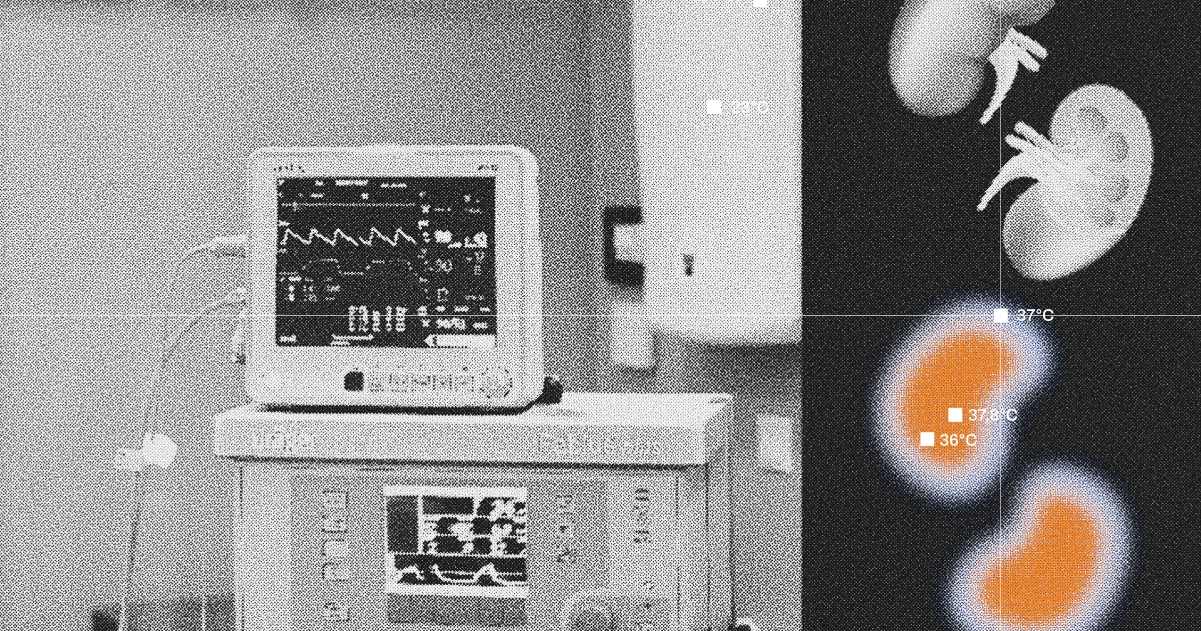
This is the story of a project that sounds like science fiction until you spend a few weeks in hospitals observing real clinical processes. In ZIMA UX, UI & Design Strategy We worked on research and recommendations for a kidney perfusion device—a system where precision, timing, and high-pressure decision-making directly impact human life. This is where User Experience meets medicine and medical products.
.png)
Magdalena Kurowska, a user experience researcher and designer, discusses the project with Ilona Skarbowska.
Ilona Skarbowska
Hi Magda, I'd like to talk to you today about a user experience project you recently completed for a client in the healthcare industry. Let's start by describing the project itself. Tell us a few words – what were its specific features?
Magdalena Kurowska
This was primarily a research project. Its goal was to understand how the kidney perfusion process works in Polish hospitals and how the newly designed device should fit into existing practice.
We examined current standards, analyzed the user journey from the perspective of the equipment currently in use, and examined who interacts with it and at what stages. It was also important to understand the constraints hospitals face, for example, when transporting the device between departments.
Our task was to identify all the barriers and challenges that needed to be addressed during the design phase. The idea was to closely examine the environment in which the device would operate, and then translate these observations into specific recommendations for the design team.
Ilona Skarbowska
So it was primarily a research project. Did the fact that it was a medical project—that you had to talk to doctors and be on-site at the hospital—influence your choice of research method?
Magdalena Kurowska
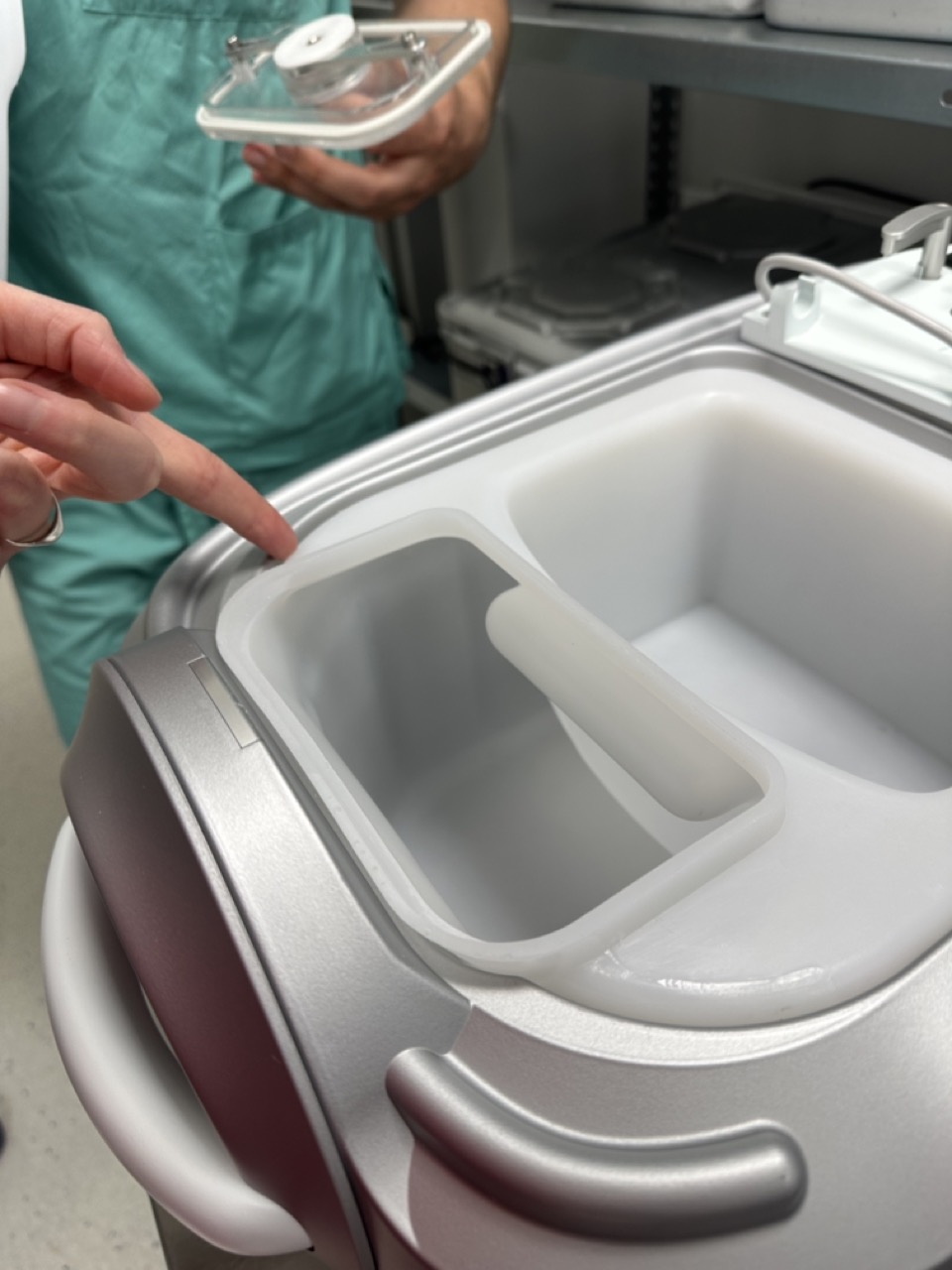
Absolutely. First and foremost, the research had to be conducted on-site. It's difficult to imagine conducting it remotely when the subject of analysis is a physical device. You have to see it, touch it, and test how it functions in practice. The spatial context is also crucial – the layout of the rooms, the way equipment is moved, and the organization of staff work.
The interviews themselves were very exploratory and open-ended. We didn't start with pre-defined hypotheses, but rather tried to understand the reality in which the device would be used as best as we could. This was natural at this stage of the project, as the product was still in its early stages of development.
Ilona Skarbowska
Qualitative research was conducted. Did you also have any quantitative data, or did you focus solely on qualitative research to identify as many issues as possible?
Magdalena Kurowska
We had access to extensive qualitative material previously collected by the client. Our goal was to test these assumptions against reality and see how the process unfolded in practice. We wanted to identify as many challenges, limitations, and potential improvements as possible that would be worth considering in the further design of the device.
Ilona Skarbowska
What do you think was the biggest challenge in this project?
Magdalena Kurowska
For me personally, the biggest challenge was simply understanding what we were talking about. This wasn't about e-commerce shopping, but something that initially seemed completely abstract. Previously, I hadn't even heard of the term "normothermic perfusion."
At times, it was difficult to keep up with the doctors, who routinely use highly specialized language. Concepts, abbreviations, and processes were jumbled in my head almost instantaneously. I remember driving to a meeting in Krakow, talking to ChatGPT about perfusion from every angle possible. I wanted to understand the topic as best as I could, familiarize myself with the terminology, and prepare for the conversations so I could confidently participate in discussions with the experts.
The MedTech industry is highly expert and specialized. I can talk about online shopping without any preparation, as I do it almost daily. However, when the topic involves a medical procedure or surgery, and you don't have a medical background, entering this world requires significantly more time, work, and exploration.
Ilona Skarbowska
Can we conclude from this that when conducting research with physicians and in the healthcare industry, it's important to understand the specifics of this segment? That a UX designer-researcher doesn't need to be an expert, but having some experience in this field allows them to better conduct research?
Magdalena Kurowska
Absolutely. When we test a food ordering app, most of us intuitively understand the process because we use similar services every day. When it comes to the complex processes occurring in a hospital, we lack that intuition.
Therefore, before beginning research, it's crucial to spend time understanding the basic concepts, processes, and context of user work. The goal isn't to turn a researcher into a doctor, but to enable them to conduct conversations with sufficient awareness to ask relevant questions, understand the answers, and draw valuable conclusions.
Ilona Skarbowska
What was the challenge in the project itself?
Magdalena Kurowska
One of the biggest challenges was access to surgeons. This is a small and highly specialized environment, so the number of potential respondents was severely limited. We couldn't conduct a traditional pilot with physicians simply because there weren't enough people to participate. In practice, this meant that we only fully tested the workshop scenario for the first time during a meeting with the first group of surgeons at a Warsaw hospital. This required a great deal of flexibility and a willingness to respond on an ongoing basis.
Organizing the tests themselves was also a challenge. Scheduling appointments was time-consuming because doctors work under enormous pressure, often working several hours a day. Their availability is very limited, and schedules change rapidly. Furthermore, all the tests were performed in hospitals, so we had to adapt to the work schedules of the facilities and medical staff.
Ilona Skarbowska
What do you think – is there any research method that won't work in projects of this type?
Magdalena Kurowska
Remote methods first come to mind. The key to this project was working with a physical device. We needed to see it in a real-world environment, seeing how it was used, who interacted with it, and how it functioned within the hospital environment. This kind of knowledge cannot be fully acquired through a computer screen.
However, this is specific to this specific project, not the entire healthcare industry. For digital products, such as apps or systems for medical personnel, remote testing can be most effective. It all depends on what we're examining and what context we want to understand.
.avif)
Ilona Skarbowska
One more question: this was a physical device, and the research took place in a hospital. Did you have to prepare in any special way? You mentioned learning the terminology—was there anything else specific?
Magdalena Kurowska
I watched medical dramas, including The Good Doctor (laughs). That’s a bit of a joke, but only a little. I really tried to immerse myself in that world as much as possible and get comfortable with its realities.
Ilona Skarbowska
And what is your biggest takeaway from this process?
Magdalena Kurowska
One of the most valuable things I learned during this project was how to use artificial intelligence as a tool to support the research and design process.
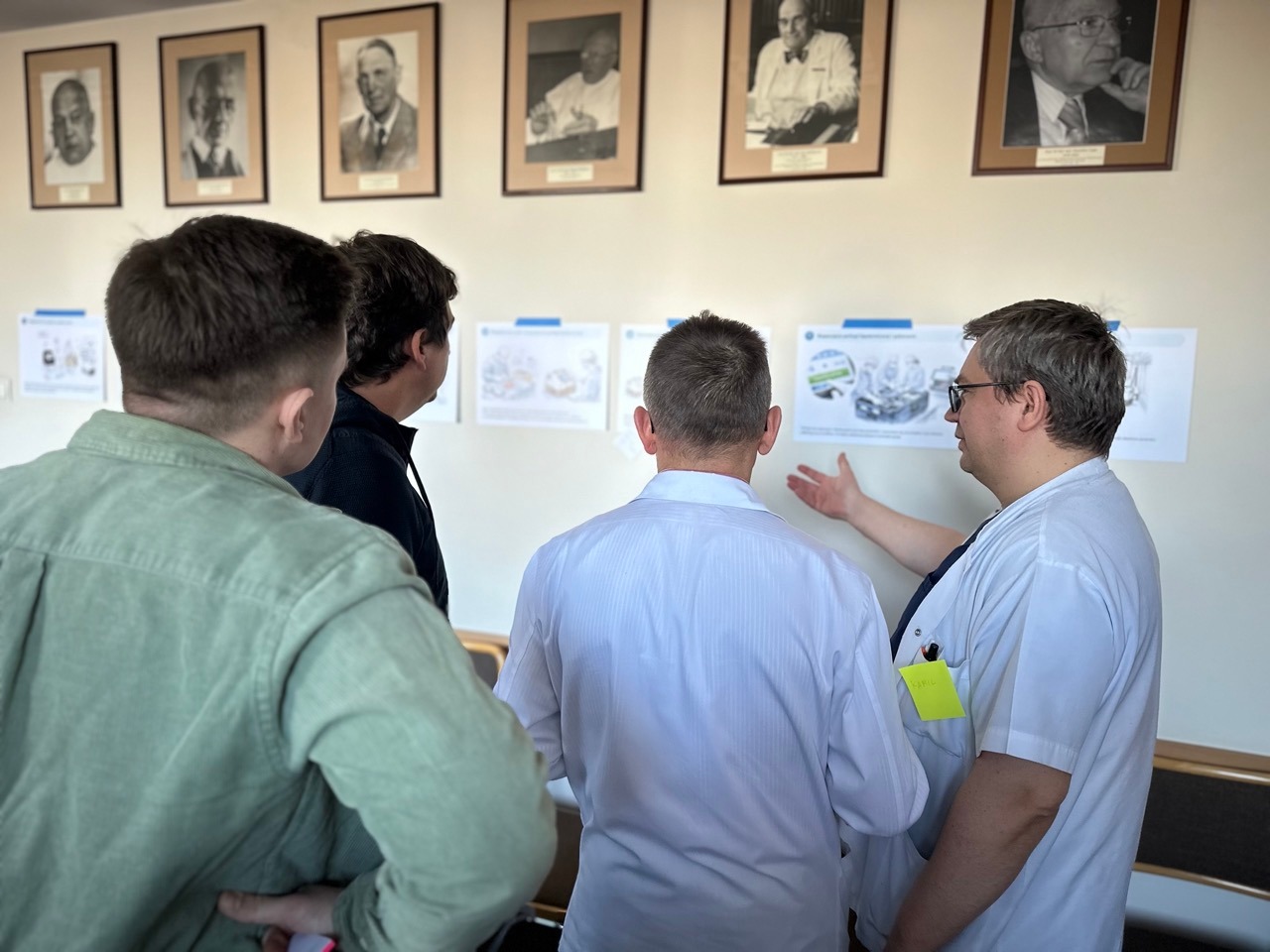
While preparing for the workshops, I used AI to create a storyboard showing the kidney transplant process—from the moment the team leaves to retrieve the organ, all the way to the transplant itself. I wasn't aiming for a precise representation of reality, though. On the contrary, the storyboard was intentionally sketchy and simplified. The goal was to provoke participants to discuss, correct errors, and share their own experiences.
If I had prepared those materials myself, I probably would have gotten too bogged down in the details. AI helped me create something more general, which worked perfectly as a starting point for conversation. The surgeons reacted immediately: "No, that's not how it works for us," "We don't use a scale to weigh the kidney," "Our hospital doesn't have that kind of cooler." And that was exactly the point.
It was a valuable lesson for me: sometimes the best research materials aren't perfect or complete. Their role is to spark discussion and extract knowledge from experts, and in this case, AI helped me immensely with that.
Ilona Skarbowska
Wait, tell me more about that. Did you use AI to generate a storyboard during your UX research design process?
Magdalena Kurowska
Yes. First, I spoke with a doctor who explained the transplant process to me. Based on that, with the help of AI, I prepared a simple storyboard showing the successive stages. A few years ago, preparing such material would have taken me about a week. In this case, I created it in 3-4 hours.
Ilona Skarbowska
How did you do that technically—did you take the transcript from the conversation with the doctor and use that to prompt the AI, or did you work differently?
Magdalena Kurowska
First, I developed the aesthetic of the storyboard—I wanted the illustrations to be sketchy, not overly precise, and to show the device as a prototype rather than a finished product. Once I had that style, I described the context of the workshop to the AI.
Later, I generated subsequent frames and checked them very carefully. AI could make mistakes that might distract the participants—for example, one image showed two kidneys instead of one. That’s why every illustration had to be verified and sometimes corrected to avoid a faux pas.
Probably from the fact that I managed to engage in a dialogue with transplant surgeons. Before this project, I had absolutely no knowledge of transplants, yet I managed to understand the subject well enough to hold meaningful conversations and ask the right questions. If someone woke me up in the middle of the night, I could explain how a kidney transplant works in just a few sentences.
Ilona Skarbowska
Would you say that designing research in the medical industry is different from designing research in other sectors?
Magdalena Kurowska
Yes, it definitely differs. First and foremost, the metrics for success are different. We aren't talking about conversion, click-through time, or other typical KPIs known from digital products. Ergonomics, safety, and minimizing process errors are what matter most.
You could say that in these types of projects, the most important thing is for the user or device operator to be able to perform their work as precisely as possible, without unnecessary complications—because the stakes aren't conversion rates, but actual human health and lives.
Ilona Skarbowska
Would you say that med-tech projects are challenging when it comes to UX?
Magdalena Kurowska
Yes, because it is a very complicated and complex environment. Processes often vary depending on many factors, such as the patient's age or a specific clinical case. On top of that, there are many legal requirements and the need to collect a wide variety of input data.
In e-commerce, we have fairly well-known patterns—listings, PDPs, carts—and we can use ready-made templates and proven solutions. In the medical industry, there are far fewer universal standards, and every process often has to be designed from scratch, with close attention to the specific context and procedures.
Ilona Skarbowska
What are you most proud of?
Magdalena Kurowska
Probably the fact that I managed to engage in a dialogue with transplant surgeons. Before this project, I had absolutely no knowledge of transplants, yet I managed to understand the subject well enough to have meaningful conversations and ask the right questions. If someone woke me up in the middle of the night, I could explain how a kidney transplant works in just a few sentences.
A very important moment for me was when, during one of the workshops, I heard the client say: "we should have done this years ago." That was a sign that what we had done was truly valuable.

Read about UX
See other articles that may also be of interest to you
.png)
.png)
.png)
.png)
.png)
.png)


![This is what you need to know to make your medtech business work [+UX examples]](https://cdn.prod.website-files.com/665f016b950e89499f580acc/6a43a79743af9d4fe4319261_ToMusiszWiedziecZeby....png)