What are the most important takeaways from AI & MedTech CEE for UX and UI designers that you need to know in 2026?
In June 2026, Warsaw hosted the AI&MEDTECH CEE conference – Poland's largest event dedicated to artificial intelligence (AI) and innovation in healthcare. In this article, we will share the most important conclusions and observations from the conference, which could be crucial for designing digital products and services in the medical sector in 2026.

What is the coordinated care model and why is it changing the healthcare system in Poland?
One of the challenges of the Polish healthcare system is the inverted care model, where most services are provided by specialist doctors, while the potential of primary care physicians and other medical staff is not fully utilized. Michał Dzięgielewski, Plenipotentiary of the President of the National Health Fund, spoke at the conference about current strategies changing this approach in Polish hospitals. It turns out that the coordinated care model plays a key role in these strategies. Although it is not a new solution globally, in Poland it is only now gaining popularity and gradually becoming an important element in the organization of healthcare services.
Thermometer innovation What is the coordinated care model?
Opieka koordynowana w POZ ma zapobiec sytuacjom, w których pacjent z chorobą przewlekłą musi samodzielnie organizować proces leczenia, umawiać wizyty u różnych specjalistów oraz pilnować terminów badań diagnostycznych. W tym modelu to Podstawowa Opieka Zdrowotna (POZ) staje się centrum koordynacji leczenia pacjenta.The introduction of electronic thermometers was not a technological revolution. However, if we take into account the need to shake the mercury thermometer (who did not get frustrated with that) vs. pressing a button to reset the temperature, the difference becomes apparent.
What does coordinated care look like in practice?Innovative approach to medtech
- faster,
- more specifically,
- reduce the risk of errors.
- Specialists, a nurse, a health educator, and a dietitian can be involved in the process.
- Many clinics also have a coordinator who helps schedule tests, monitors deadlines, and communicates with patients.
What does this mean for designing digital products and services for medicine?Asthma under (digital) control
“In my opinion, the coordinated care model will increase the demand for tools enabling online patient management. In short: the telemedicine segment will grow. Patient-doctor contact will be asynchronous, mainly through online channels.”
– Ilona Skarbowska
Poland a leader in AI in the public sector? Development policy to 2030Bad
Poland is a trendsetter when it comes to implementing artificial intelligence in the public sector, especially in healthcare – this topic was clearly highlighted during AI & MEDTECH CEE. Mariola Józwiak-Węclewska, Chief Specialist in the Innovative Public Policies Department of the Research and Innovation Department at the , spoke about the directions of AI development in public administration. The speaker presented the assumptions of the artificial intelligence development policy until 2030.
Pillars of AI policy until 2030:
- The ministry's policy inherently states that technology should serve humanity, not the other way around. The value of artificial intelligence should be measured by its ability to solve real diagnostic problems, not just by its level of technological advancement.
- Another important aspect is Open Data – Poland is developing PLLuM language model (Polish Large Language Model), which is based on Open Source. However, it is difficult to expect that a Polish language model will be able to compete with the largest foreign solutions. The Polish language constitutes less than 1% of the data used to train global LLM models, which may make it difficult to keep pace with their development.
- Poland's AI implementation policy assumes measurable success indicators – it is gratifying that by 2030, by assumption, 50% of medical staff are expected to safely use AI in their work.
Jak AI zmieni rolę projektantów UX i UI w MedTech?How will AI change the role of UX and UI designers in MedTech?Walk a mile in someone else's prosthesis
“User Experience design will finally cease to be a strange hybrid between a researcher and someone working in Figma. The role of designers will be to focus on defining a real business need and verifying it with the market. The researcher's role will change, and UX designers will actively participate in process mapping and how algorithms will look.”
– Radek Rejsel
“AI should be narrowly implemented in medicine, that is the conclusion from the OECD report. Narrowly, well-defined tasks. AI should put the patient and medical professional in the center.”
– Karolina Tądel,
Deputy Director of the e-Health Department, Ministry of Health
Chatboty AI w polskiej ochronie zdrowia: kiedy wejdą do użytku i czego uczy nas przykład NHS?
AI Chatbots in Polish Healthcare: When Will They Be Implemented and What Can We Learn from the NHS Example?
In summary: incorporate not only technology into the product, but also your user
Whether you want it or not: if you manufacture medical equipment, then you have to invest more in its usefulness. At stake is not only the success of your business, but Ministry of Health , the first implementation of a chatbot utilizing large language models (LLMs) is scheduled to take place later this year (2026). Nie będzie to jednak pionierskie rozwiązanie, w tym zakresie przoduje Wielka Brytania – National Health Service in England (NHS) wydał formalne wytyczne wdrożeniowe dla sztucznej inteligencji w ochronie zdrowia.
However, this will not be a pioneering solution; the UK is leading the way in this area, with the National Health Service in England (NHS) having issued formal implementation guidelines for artificial intelligence in healthcare.
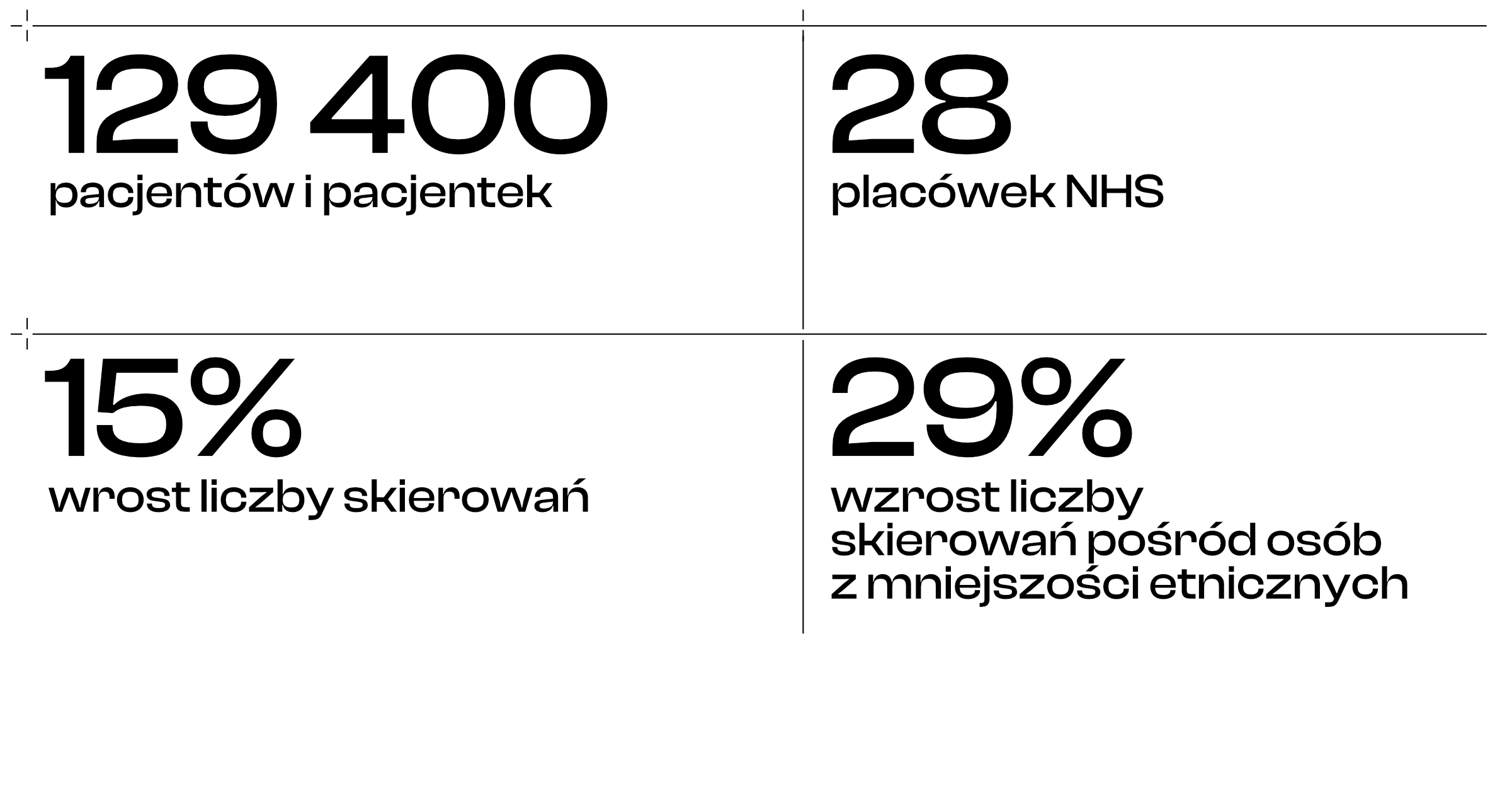
AI chatbots are already being used in some NHS regions to conduct initial triage even before medical staff analyze the case. Patients describe their symptoms, and the algorithm assesses possible causes of the health problem and the urgency of intervention within seconds. The technology is also applied in the area of mental health. A study published in February 2024, covering 129,400 patients across 28 NHS facilities, showed that the implementation of a chatbot for self-referrals resulted in a 15% increase in the number of referrals. An even greater increase was observed among ethnic minority representatives, where the number of referrals rose by 29%*.
A similar trend is also developing in other European countries – Finland, Estonia, and Spain have already implemented AI in staff training, medical data analysis, and early disease detection. Therefore, Poland is not a pioneer in the implementation of specific tools – but, as the adopted policy until 2030 shows, it is entering this path at a good time, with a clearly defined plan.
“Designing for MedTech and medicine in general is primarily about finding solutions for patients. The chatbot that Poland will implement is a response to the problem of overloaded phone lines and aims to relieve medical staff from being a call center, allowing them to provide real help to patients in facilities. At ZIMA UX, UI & Design Strategy, as user experience designers, we know very well that users don't like talking to bots; they are put off by experiences in other sectors. When designing such solutions, it's crucial to empathize with the patient's situation, understand their needs, but most importantly, their fears. The role of a UX researcher will grow in projects utilizing artificial intelligence and medicine.”
– Ilona Skarbowska
*source:
https://www.aicerts.ai/news/ai-chatbots-boost-public-health-in-nhs-mental-health-services/

Read about UX
See other articles that may also be of interest to you
.png)
.png)
.png)
.png)
.png)









![This is what you need to know to make your medtech business work [+UX examples]](https://cdn.prod.website-files.com/665f016b950e89499f580acc/6a43a79743af9d4fe4319261_ToMusiszWiedziecZeby....png)